

A specification should describe the watch being sold—not simply repeat the specifications of the genuine reference it is based on.
ReplicaFactory uses product-specific information wherever possible and separates confirmed specifications, pre-shipment QC results, and factory-stated information. This page explains how we describe materials, movements, accuracy, crystals, dimensions, water resistance, power reserve, and other technical details across our catalog.
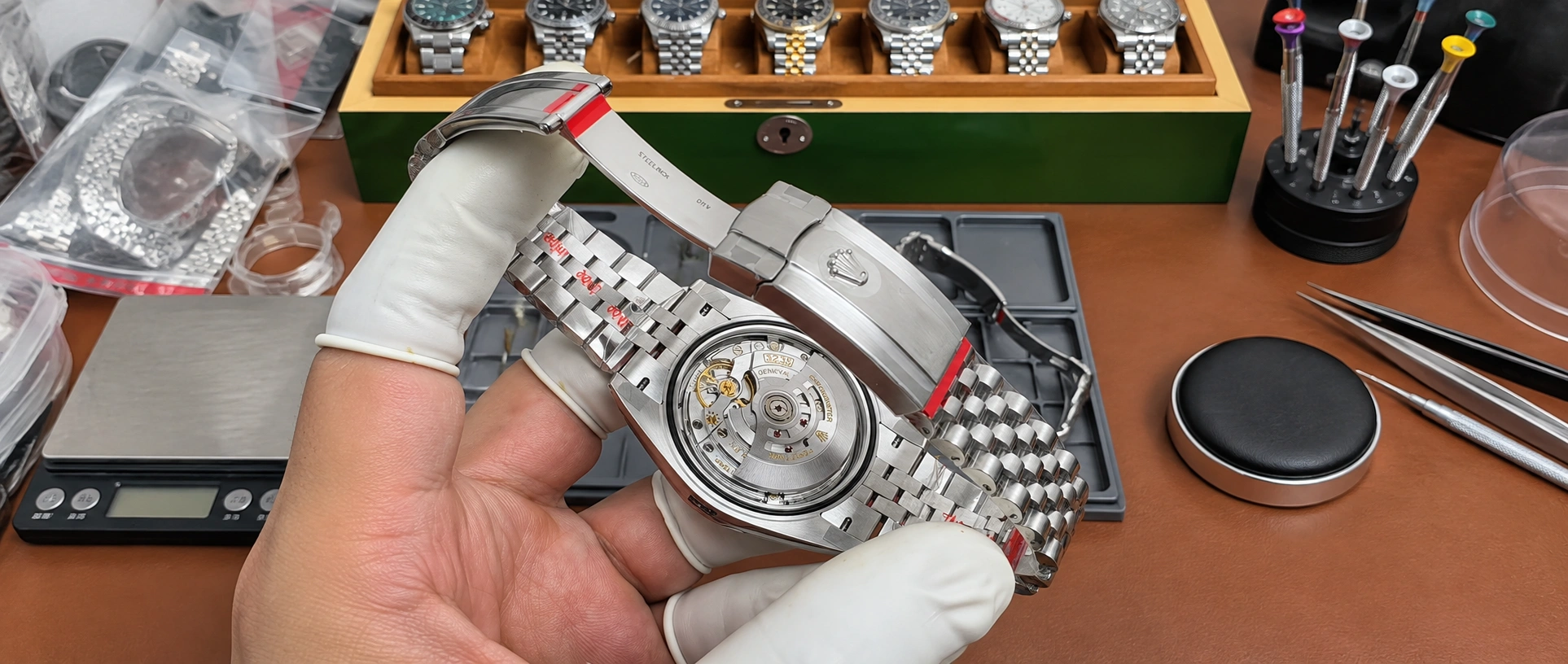
The genuine watch is useful as a reference for design and intended construction, but its technical specifications do not automatically become the specifications of the watch we sell.
Specifications should describe the actual version offered, including its movement, materials, dimensions, crystal, functions, and construction.
Some information comes from the factory or supplier. When a specification has not been independently verified, it should not be presented as though it has been.
Specifications can change by model, factory, production version, movement, material, and quality tier. A rule that applies to one watch may not apply to another.
Our basic rule: if the genuine reference uses a particular material, movement, water-resistance rating, or power reserve, we do not automatically treat that figure as a specification of the version being sold.
This distinction is especially important when comparing watches that are designed around an existing reference.
A genuine reference may provide useful context for case size, material, movement architecture, functions, crystal treatment, water resistance, and other design details. But those figures describe the genuine watch.
The version being sold must be evaluated according to its own construction.
For example, if a genuine watch uses a particular grade of titanium, that does not by itself prove that every version based on that reference uses the same titanium grade. The same principle applies to stainless steel, ceramic, carbon materials, sapphire coatings, movements, power reserve, and water resistance.
Reference-appropriate does not mean genuine. When we describe a component or material as reference-appropriate, we mean that it is selected according to the construction of that particular watch. It does not mean the component is genuine or manufactured by the original brand.
ReplicaFactory offers Asian, Swiss, and 1:1 Clone quality levels. Moving between tiers can change the movement, materials, finishing, factory source, QC target, and warranty coverage.
This page explains how specifications are described. For the full differences between the three product levels, see our Quality Tiers guide .
Material specifications describe the construction of the watch being offered, not simply the material used by the genuine reference.
Applicable Asian steel models typically use 316L, Swiss models use 317L, and applicable 1:1 Clone steel models use 904L according to our tier specifications.
Titanium specifications are model-dependent. Applicable 1:1 Clone models may use Grade 5 titanium (Ti-6Al-4V) when that material is part of the specific version's construction.
Ceramic, carbon-based materials, and other constructions should be described according to the specific watch rather than treated as universal tier specifications.
Not every 1:1 Clone is a 904L steel watch. A titanium, ceramic, carbon, or mixed-material reference should use specifications appropriate to that version rather than being forced into a stainless-steel specification.
Movement terminology can easily become misleading if a movement family, architecture, or clone designation is presented as something it is not.
Entry-level models use Chinese automatic movements such as the DG2813 family and other calibers selected according to the watch.
ETA-style describes movement architecture used in our Swiss tier. It does not mean the movement is a genuine Swiss-made ETA caliber.
Clone movements are selected according to the watch and may reproduce the architecture, layout, and functions of the corresponding caliber more closely.
A clone caliber is still a clone caliber. A designation such as a model-specific clone movement describes its intended architecture or application. It does not mean the movement was manufactured by the original watch brand.
Mechanical movement performance changes with position, state of wind, temperature, use, magnetism, impact, and service condition. For that reason, our accuracy figures describe the target used during pre-shipment QC rather than a permanent rate guarantee.
Timegrapher testing gives us a snapshot of movement performance during inspection. The readings are used as QC measurements at the time of testing—not as permanent performance guarantees.
| Quality Tier | Pre-Shipment Rate Target | How to Read It |
|---|---|---|
| Asian | Approx. ±30–60 sec/day | Entry-level mechanical QC target |
| Swiss | Approx. ±10–15 sec/day | Tighter mid-tier QC target |
| 1:1 Clone | Within ±5 sec/day | Our tightest pre-shipment rate target |
QC target does not mean permanent accuracy. A mechanical watch that meets its target during inspection may run differently later under different conditions.
For more information about manual inspection, timegrapher testing, functional checks, and final verification, see our Quality Control process .
The crystal material and its anti-reflective treatment are related, but they are not the same specification.
Applicable models use synthetic sapphire according to the quality tier and product specification.
AR treatment is model-dependent. It should only be stated where it applies to the version being offered.
Crystal appearance can also be affected by thickness, coating, dial color, lighting, and viewing angle.
Higher-tier versions may place greater emphasis on matching the crystal profile and AR treatment appropriate to the reference.
A watch can be described by several measurements, and two watches with the same stated diameter may still wear very differently.
Diameter normally refers to the case width, excluding the crown unless otherwise stated.
Thickness affects how the watch sits on the wrist and may vary between factories or production versions.
Lug shape, bracelet or strap design, case profile, and weight can affect fit just as much as the nominal case diameter.
If an exact measurement is important to you, confirm the specification of the specific version rather than relying only on the dimensions of the genuine reference.
Water resistance is one of the specifications most likely to be misunderstood when comparing a watch with its genuine reference.
Water resistance depends on the construction of the individual watch, including seals, crown design, caseback, crystal installation, assembly, and overall condition.
A genuine reference may be rated for a particular depth, but that rating does not automatically apply to another watch based on the same design.
Some specialist factories may state higher water-resistance capability for particular models. When we rely on that information without an independent pressure test of the individual watch, it should be understood as a factory-stated specification.
If you plan to swim or expose the watch to significant water, do not rely on the genuine reference rating or a general tier description. Water resistance should be considered model-dependent.
Power reserve describes approximately how long a fully wound mechanical movement can continue running before it stops.
It should not be assumed from the genuine watch alone. Different movement versions can have different mainspring systems, efficiency, beat rates, and power-reserve characteristics.
When a power-reserve figure comes from the movement manufacturer or factory rather than our own measurement, we describe it as factory-stated.
For example, if a movement is supplied with an approximately 70-hour power-reserve specification but we have not independently measured that individual watch across a complete discharge cycle, the appropriate description is “Factory-stated power reserve: approximately 70 hours.”
Some technical information is supplied by the factory or movement manufacturer rather than independently measured by ReplicaFactory.
The specification originates from the factory, supplier, or movement manufacturer associated with that version.
Where verification matters, factory-provided information should be identified as factory-stated rather than presented as an independent ReplicaFactory test result.
A factory-stated specification is not the same as an independent measurement or certification of the individual watch you receive.
This distinction is particularly important for specifications such as power reserve and water resistance, where actual performance can depend on the movement, assembly, condition, and individual watch.
A watch name or reference does not always identify one universal specification.
Different factories may produce versions of the same model. Production updates can also change movements, materials, dimensions, finishing, crystals, bracelets, or other components over time.
This is particularly relevant to 1:1 Clone models, where factory and movement selection are often model-specific.
For that reason, specifications should be read together with the factory, movement, quality tier, and version where those details are available.
Need to verify a specific version? If a particular movement, material, dimension, or other specification is important to your purchase, contact us with the model or reference before ordering.
You do not need to memorize every technical term. These four questions cover most of what matters.
Check the quality tier, movement, factory, and version where that information is available.
Separate the product's stated construction from specifications that belong only to the genuine reference.
Pre-shipment QC information should not be confused with long-term performance guarantees or independent certification.
Pay attention when a figure is supplied by the factory rather than independently verified on the individual watch.
If one technical detail is important to your decision, confirm that detail for the exact version you are considering.
The actual watch version takes priority over assumptions based on the genuine reference or another factory's version.
They should not be. The genuine reference can provide design context, but the specifications shown for a product should describe the actual version being offered.
No. Swiss is the name of our mid-tier quality level. ETA-style movements in this tier are not represented as genuine Swiss-made ETA movements.
No. 1:1 Clone identifies our highest quality tier. It does not mean the watch is genuine or that every material, dimension, component, or performance figure is identical to the original.
No. 904L applies to appropriate steel models in that tier. References designed around titanium, ceramic, carbon, or other materials use specifications appropriate to the particular version.
It means the information was supplied by the factory, supplier, or movement manufacturer and should not be confused with an independent measurement or certification of the individual watch.
No. They are pre-shipment QC targets. Mechanical watch performance can change with position, state of wind, temperature, use, magnetism, impact, and service condition.
No. The genuine reference rating should not automatically be applied to another watch. Water resistance depends on the specific model, construction, assembly, seals, and individual watch.
Different factories and production versions can use different movements, materials, dimensions, finishing, crystals, bracelets, and other components. Specifications should therefore be considered version-specific where applicable.
Confirm it before ordering. Send us the model or reference through our Contact Us page and tell us which specification you need verified.
These two guides cover the areas most directly connected to the specification standards explained on this page.
If a particular movement, material, dimension, factory, water-resistance detail, or other specification matters to your purchase, send us the watch or reference you're considering. We'll help confirm the information available for that specific version.